In the current enterprise landscape, artificial intelligence has evolved far beyond a speculative tech-stack line item into a core driver of competitive advantage. However, as generative AI continues to captivate boardroom discussions, C-suite executives face a critical imperative: distinguishing between fleeting technology hype and tangible, scalable business outcomes . The ultimate metric of success is not how many AI models are deployed into production, but rather how effectively they drive top-line growth, compress operational costs, or mitigate organizational risk . Achieving these goals requires moving past simple chatbots toward an enterprise-wide understanding of how traditional automation, Retrieval-Augmented Generation (RAG), and autonomous AI Agents can be combined to maximize productivity .
Demystifying the Intelligence Spectrum: Machine Learning vs. Generative AI
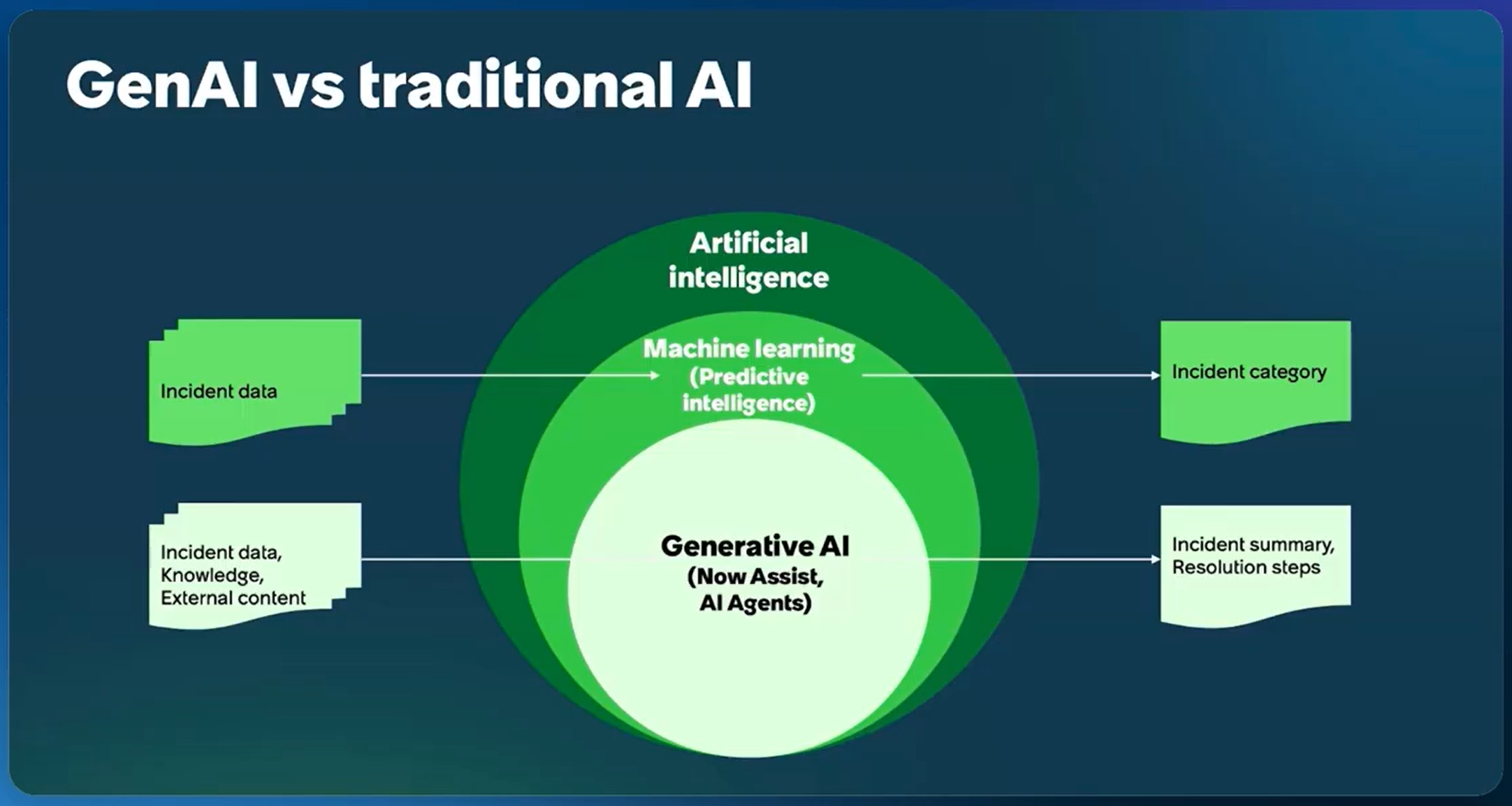
To architect an effective automation strategy, leadership must first align on the fundamental shift in how modern systems process data. Traditional machine learning functions deterministically by ingestion of structured datasets to solve hyper-specific, singular problems—such as evaluating historical data to automatically categorize an IT service request . Generative AI introduces a paradigm shift by processing complex, unstructured multimodal inputs (including audio, video, and prose) and synthesizing entirely new outputs without requiring continuous model retraining . Enterprise capabilities expand dramatically along this spectrum:
- Predictive Intelligence: Leverages traditional machine learning to deliver high-speed, binary outputs and deterministic classification from structured datasets.
- Generative Processing: Utilizes Large Language Models (LLMs) to accurately predict subsequent tokens in a sequence, translating unstructured prompt commands into high-quality human communication.
- Retrieval-Augmented Generation (RAG): Enhances base LLM performance by injecting relevant enterprise context, boosting knowledge accuracy past 90% for advanced summarization tasks.
Precision Allocation: Balancing Rule-Based Workflows with Autonomous Agents
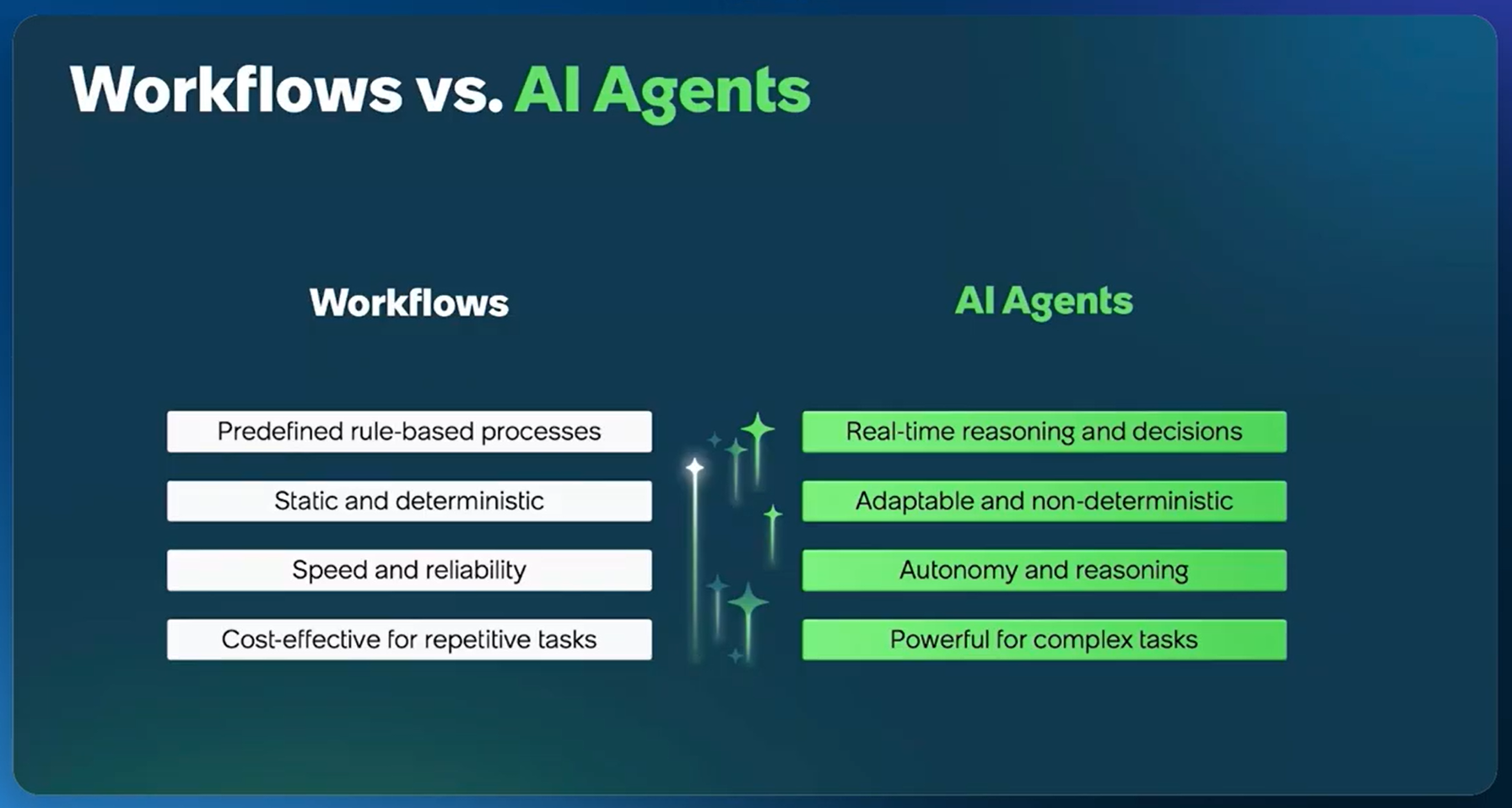
A common executive pitfall is over-engineering solutions by deploying complex, autonomous agents to handle processes that are fundamentally straightforward. Traditional programmatic workflows remain the gold standard for repetitive, black-and-white business procedures where absolute predictability, lightning-fast execution, and cost-efficiency are paramount. Conversely, autonomous AI Agents excel when confronted with ambiguous, non-deterministic problems that demand real-time reasoning and adaptation. Rather than replacing your existing digital backbone, autonomous agents complement it by step-by-step evaluation of fluid situations, evaluating context, and dynamically executing actions until a strategic goal is met.
The Enterprise Architecture: Orchestrating a Multi-Agent Ecosystem
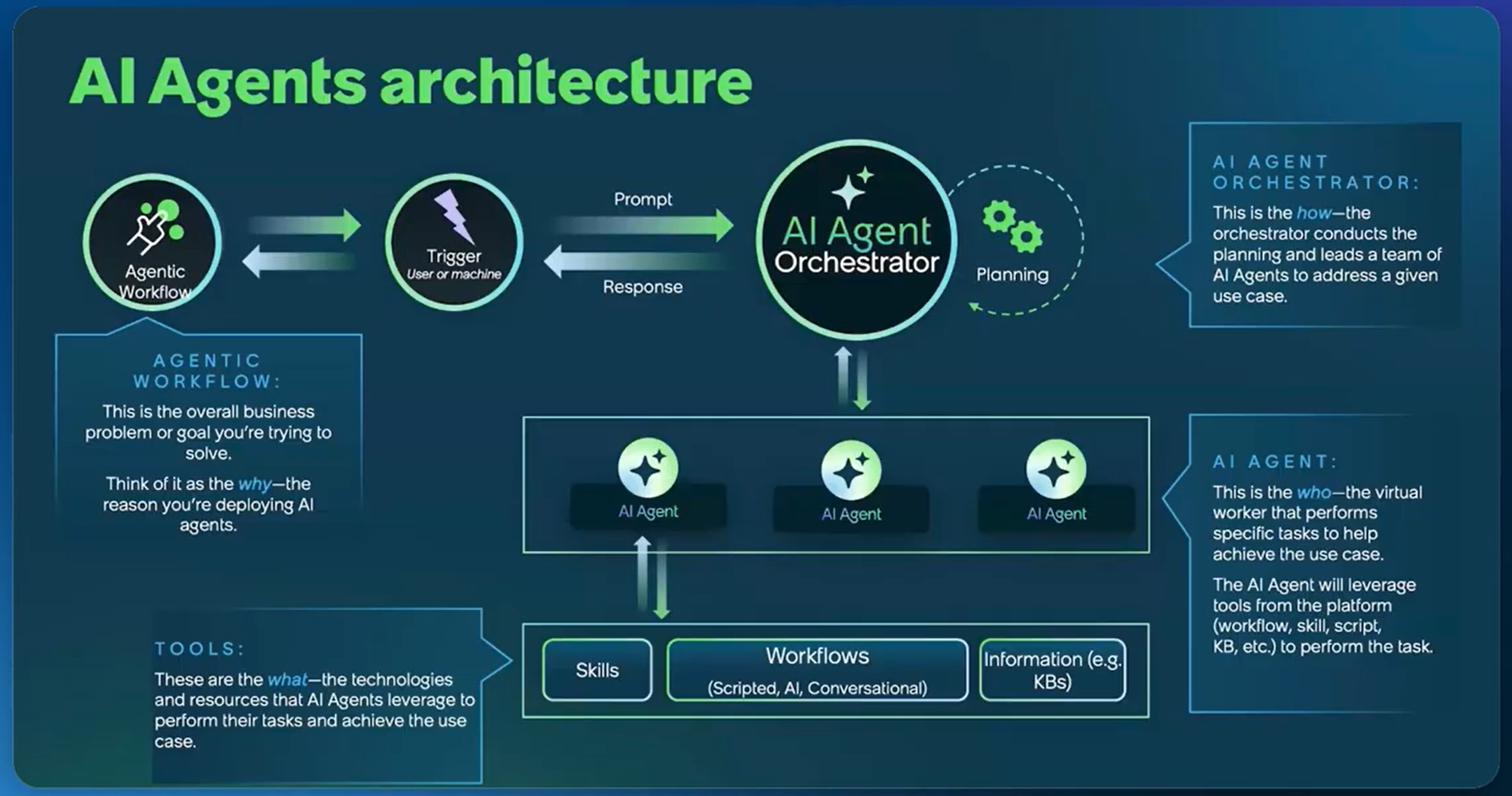
Deploying AI agents at an enterprise scale requires a robust, layered architecture to maintain rigorous operational control and transparency. At the foundational layer are specialized worker agents highly focused digital entities equipped with specific skills, knowledge bases, and scripted workflows to execute precise tasks. These individual workers are coordinated by a central Agent Orchestrator, which acts as a general contractor that translates overarching strategic objectives into discrete assignments . This entire ecosystem is triggered by user or system prompts, ensuring that your automated workflows remain closely aligned with broader business goals.
.
Key Takeaways for the C-Suite
1. Focus on Business Outcomes, Not the Technology: AI agents are a powerful tool rather than a final destination; prioritize deployments that directly impact revenue generation, cost reduction, or risk mitigation.
2. Match the Technology to Problem Complexity: Retain high-speed, cost-effective traditional workflows for deterministic, rule-based processes, and reserve expensive autonomous agents for highly ambiguous, complex problem sets.
3. Architect for Scale and Oversight: Implement a structured multi-agent framework featuring a central orchestrator to ensure that autonomous actions remain secure, coordinated, and aligned with enterprise goals.