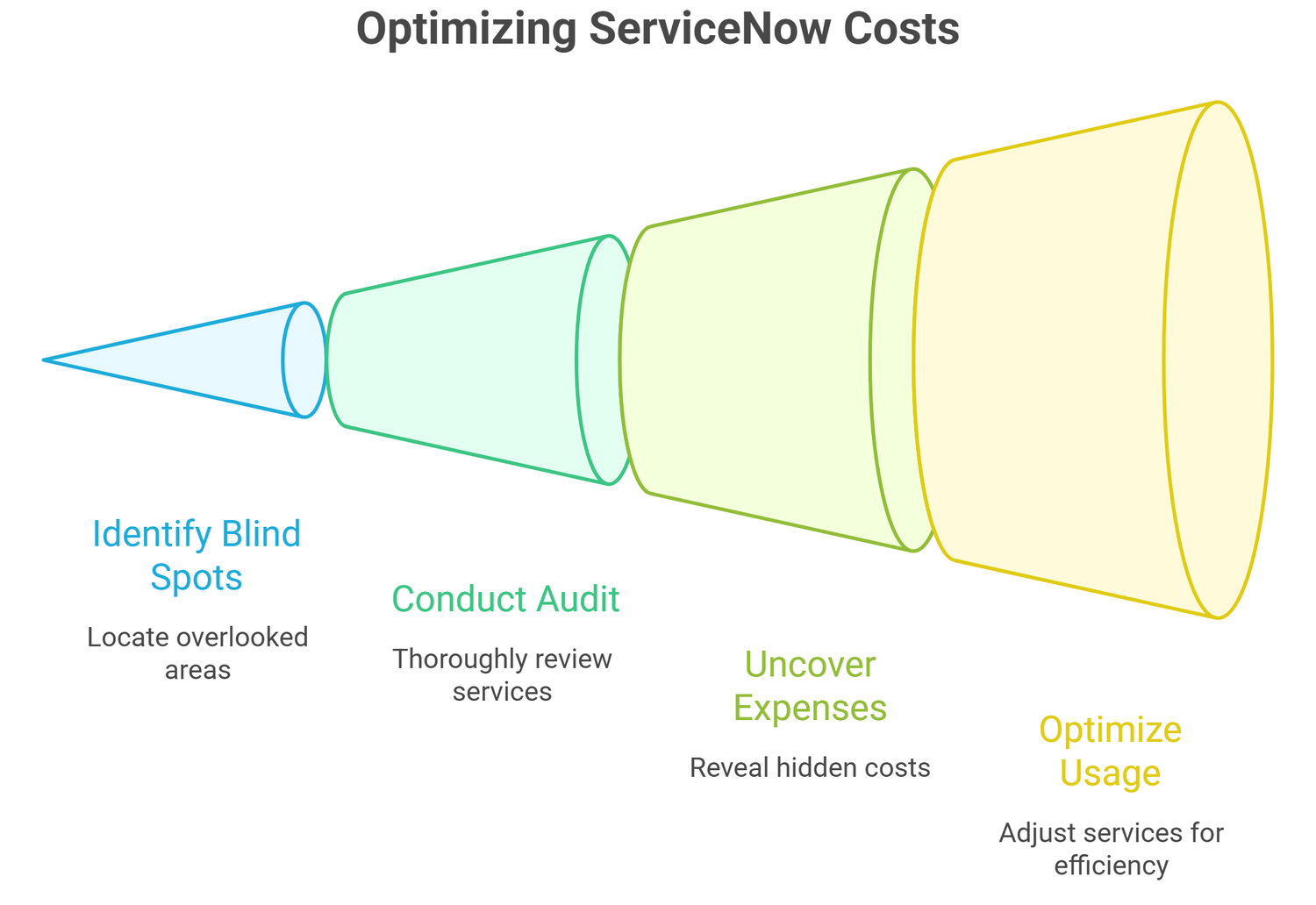
ServiceNow Renewal Is Approaching: The Critical Areas Most Companies Never Audit
Last year, an IT Director I worked with opened their ServiceNow renewal quote and just stared at it. The number was 17% higher than the previous year. There were no new modules, no major expansion, and no sudden spike in users. It was simply higher. When I asked what had changed, the answer was, “Honestly, we don’t know.” That kind of uncertainty is more common than most teams want to admit.
ServiceNow Renewal: Why Costs Rise (And What Most Teams Miss)
ServiceNow renewal increases rarely come from big, visible changes. Instead, they build quietly over time, often driven by a lack of clear visibility into usage and licensing.
Research from Gartner and Zylo suggests that as much as 30–40% of SaaS licenses go unused, while vendors continue applying annual uplifts in the range of 5–20%, as noted by Forrester. At the same time, fewer than half of organisations have a complete understanding of how their licenses are actually being used. The result is predictable. Companies walk into renewal discussions reacting to costs rather than negotiating from a position of strength. Much of this cost pressure comes from issues that are easy to overlook. License waste often accumulates through inactive users and over-provisioned access. Over time, customisations add complexity, increasing both maintenance effort and the cost of upgrades. At the same time, organisations continue paying for modules that are only partially adopted, such as ITOM or HRSD, while contract terms quietly introduce risks through built-in uplifts, unclear licensing definitions, and exposure to true-up costs.
These problems persist largely because most teams start too late. By the time renewal approaches, there is little opportunity to clean up data, reduce waste, or build a strong negotiation position.
Organisations that successfully control costs take a different approach. They treat renewal not as a one-time event, but as an ongoing strategy supported by continuous visibility and governance. They begin preparation at least six months in advance, giving themselves time to audit usage, validate vendor-provided data, and build negotiations based on facts rather than assumptions.
Ultimately, the conversation should move beyond simply reducing cost. The real question every organisation needs to answer is whether they are paying for actual value, or simply maintaining excess capacity. From a practical standpoint, this shorter version works well for LinkedIn posts, email campaigns, and executive summaries where clarity and impact matter most. The full blog, on the other hand, is better suited for website content or thought leadership pieces. Adding one or two credible references inline helps strengthen the message without overwhelming the reader, keeping the content both authoritative and easy to digest. ServiceNow renewals usually do not become expensive overnight. They drift there quietly. Licenses are often bought based on forecasts rather than actual usage. Modules get added faster than they are adopted. Contracts evolve, but internal visibility does not keep pace. Over time, the gap widens between what companies buy and what they actually use.
Industry benchmarks suggest that a significant share of enterprise SaaS licenses goes unused, and ServiceNow environments are no exception. Renewal uplifts also tend to rise year after year, even when usage stays flat. The deeper issue is not just cost. It is control. Fewer than half of organisations have a clear, data-backed view of license utilisation versus entitlement, which means many teams walk into renewal discussions with only partial visibility. And that is where the trouble starts.
When you do not know exactly what you are using, you can end up paying for shelfware without realising it. Inactive users, duplicate roles, and over-provisioned access quietly drain budget every month. Growth can also create surprise true-up fees when licensing metrics are unclear. And if the vendor understands your usage better than you do, your negotiation position is already weaker than it should be. On top of that, leadership still expects you to prove ROI while costs keep climbing.
The renewal conversation becomes less about strategy and more about reaction. The areas most companies miss are usually the same ones. First is license utilisation. This is often the quickest place to find waste, because many environments contain users who have not logged in for months, roles that were assigned “just in case,” or expensive licenses attached to low-value activity. The answer is not complicated, but it does require discipline: licenses should align to actual usage, not assumptions.
The second area is customisation. What feels like progress in the moment can become a long-term cost multiplier. Too much custom development slows upgrades, increases maintenance overhead, and creates work that the platform may already do out of the box. Smart teams do not just build; they regularly revisit, simplify, and remove what is no longer necessary. Then there is module sprawl. ITOM may have been purchased but only partially deployed. HRSD may have been implemented but underused. New modules may have been bought for future value that never arrives. What once looked like a strategic investment can quietly turn into dormant spend. If a module is not delivering value today, it belongs in the renewal conversation.
The final area is the contract itself. This is where many renewals are won or lost, because the biggest risks are often buried in pricing and legal terms rather than in the technology. Missing price protection, unclear licensing definitions, built-in annual uplifts, and exposure to true-ups can all create cost surprises later. These are not technical issues. They are negotiation blind spots.
Most renewal strategies fail not because teams do not care, but because they start too late. Too often, the review begins only 30 to 60 days before renewal. By then, the data is incomplete or outdated, decisions are rushed, and the organisation is no longer optimising. It is simply accepting. The teams that do this well take a different approach. They build ongoing visibility into license usage. They connect licenses to actual business value. They rationalise modules and features regularly. And they treat renewal as a strategic negotiation, not a routine procurement exercise. That discipline matters more than tools. It is also why the best time to start is at least six months before renewal. That gives you time to clean your data, identify waste, and build a strong negotiation narrative. Without that runway, even good insights arrive too late.
One common pitfall is relying entirely on vendor-provided data. It is useful, but it is not neutral. If you do not validate it independently, you are building decisions on someone else’s perspective of your environment.
In the end, every renewal should answer one simple question: are you paying for value, or just capacity?
Because the goal is not to spend less. It is to spend right. If your ServiceNow renewal is approaching and you are unsure where your money is going, what can be optimised, or how strong your negotiation position really is, it is time for a proper audit. The right review can turn renewal from a cost event into a strategic advantage, with clearer data, sharper insights, and real savings.