SaaS Prices Are Falling - But Most Companies Are Still Overpaying
The cost of software is changing. Across the market, SaaS providers are under increasing pressure. Competition is growing, technology is evolving faster, and new platforms are constantly entering the market. In theory, this should mean better value and lower costs for customers. But for many organisations, the reality is very different.
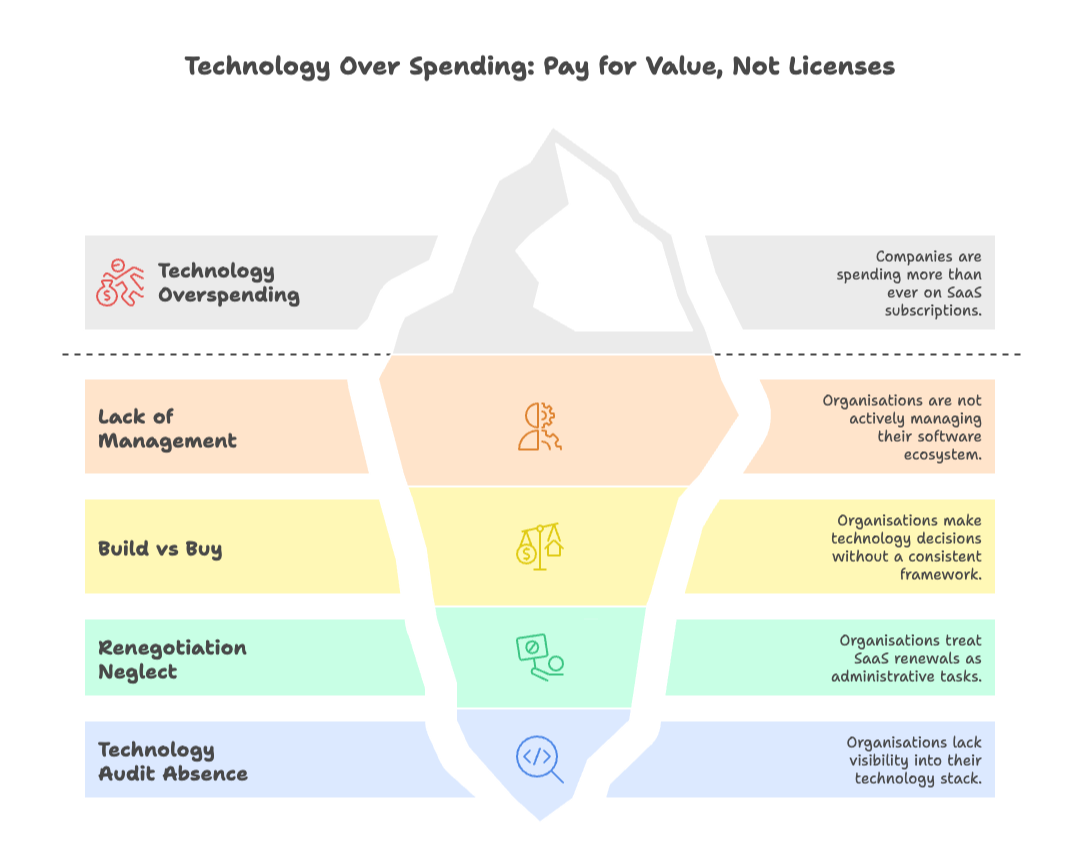
Despite falling software prices and increasing vendor competition, companies are still spending more than ever on SaaS subscriptions. Why?
Most organisations are not actively managing their software ecosystem:
- Subscriptions renew automatically.
- Licenses grow over time.
- New tools get added faster than old ones are removed.
The result is a technology stack that slowly becomes expensive, complex, and misaligned with the business.
This creates a major opportunity for organisations willing to take a more strategic approach.
Here are three actions every leadership team should consider:
1. Rethink Build vs Buy - Using a Clear Framework
One of the most important technology decisions organisations make is whether to build a capability internally or buy it from a vendor.
Yet surprisingly, most organisations still make this decision without a consistent framework.
The better approach is to distinguish between the two workflow types.
Commodity Workflows
These are capabilities that almost every organisation needs, but that do not differentiate your business. Examples include:
- internal service management
- HR workflows
- basic CRM functionality
- document management
- standard reporting capabilities
For these, purchasing a mature SaaS platform is usually the right decision. Vendors benefit from scale, shared innovation, and continuous improvements.
Competitive Workflows
These workflows represent how your organisation actually creates value and competes in the market. Examples might include:
- unique customer engagement models
- specialised operational processes
- industry-specific risk or compliance workflows
- proprietary service delivery methods
When a SaaS platform entirely controls a SaaS platform, organisations may unknowingly be outsourcing their competitive advantage.
In these cases, building internally — or at least controlling the architecture — can create long-term strategic value.
Why This Decision Is Often Difficult
- Most organisations cannot clearly identify which workflows fall into each category.
- Not because the answer is complex.
But many organisations have never mapped their technology stack against their business workflows and costs.
Without that visibility, build vs buy becomes a reactive decision rather than a strategic one.
2. Renegotiate SaaS Renewals — The Balance of Power Is Changing
For years, SaaS vendors had strong leverage during contract renewals.
Many organisations accepted:
- automatic price increases
- complex licensing models
- long-term commitments
But the landscape is shifting.
With increasing competition and pressure on growth, customer retention has become a critical priority for vendors.
This means organisations now have more negotiating leverage than they realise.
Companies that approach renewals strategically can often:
- reduce licensing costs
- optimise pricing tiers
- restructure contract terms
- consolidate platforms
- secure additional capabilities within existing agreements
Yet many organisations still treat SaaS renewals as administrative tasks rather than strategic negotiations.
3. Audit Your Technology Stack Before You Renew Anything
One of the biggest drivers of SaaS overspending is a lack of visibility.
Before renewing any subscription, organisations should conduct a proper technology audit.
This means looking beyond vendor roadmaps and focusing on real business value.
A strong audit typically examines several areas.
Licence Utilisation
Are all purchased licenses actually being used?
In many organisations, unused or inactive licenses accumulate over time — quietly increasing annual costs.
Business Outcomes
What measurable outcomes is the software delivering?
Technology investments should connect to outcomes such as:
- operational efficiency
- improved service delivery
- reduced risk exposure
- better customer experience
If outcomes are unclear, the subscription deserves closer scrutiny.
Platform Adoption
Is the platform still being used as originally implemented?
Many organisations implement sophisticated platforms but end up using only a small portion of their capabilities.
Over time, powerful systems can become expensive tools for basic functions.
Overlapping Tools
It’s common for organisations to accumulate multiple tools that solve similar problems.
Examples include:
- multiple workflow platforms
- overlapping automation tools
- duplicate analytics solutions
- redundant integration technologies
Without regular rationalisation, these overlaps can significantly inflate software costs.
The Real Opportunity: Optimising Your SaaS Ecosystem
Reducing SaaS spending isn’t just about cutting software.
It’s about building a technology ecosystem that aligns with how your organisation actually operates.
This means:
- Understanding your technology landscape
- identifying where SaaS provides real value
- retaining control over strategic capabilities
ensuring vendors support your strategy rather than dictate it
Organisations that take this approach often discover significant opportunities to:
- reduce software costs
- simplify their architecture
- increase platform adoption
unlock greater return on technology investments
How We Help Organisations Navigate This
Many organisations know their technology stack is growing more complex, but they lack the time or internal perspective to evaluate it properly.
Our team works with organisations to bring clarity and structure to their SaaS ecosystem through:
Technology Stack Mapping
Understanding what platforms exist, what they cost, and how they support the business.
Build vs Buy Strategy
Developing a principled framework to guide technology decisions.
SaaS Spend Optimisation
Identifying underutilised licenses, redundant platforms, and opportunities for consolidation.
Vendor Renewal Strategy
Helping organisations approach contract renewals with data-driven leverage.
The Bottom Line
SaaS prices may be falling across the market. But unless organisations actively review their technology stack, they may continue paying more than necessary.
The organisations that benefit most from the changing software landscape will not simply adopt new tools. They will take control of their technology strategy, vendor relationships, and platform architecture. Because the real advantage doesn’t come from buying more software. It comes from using the right software, in the right way, for the right reasons.