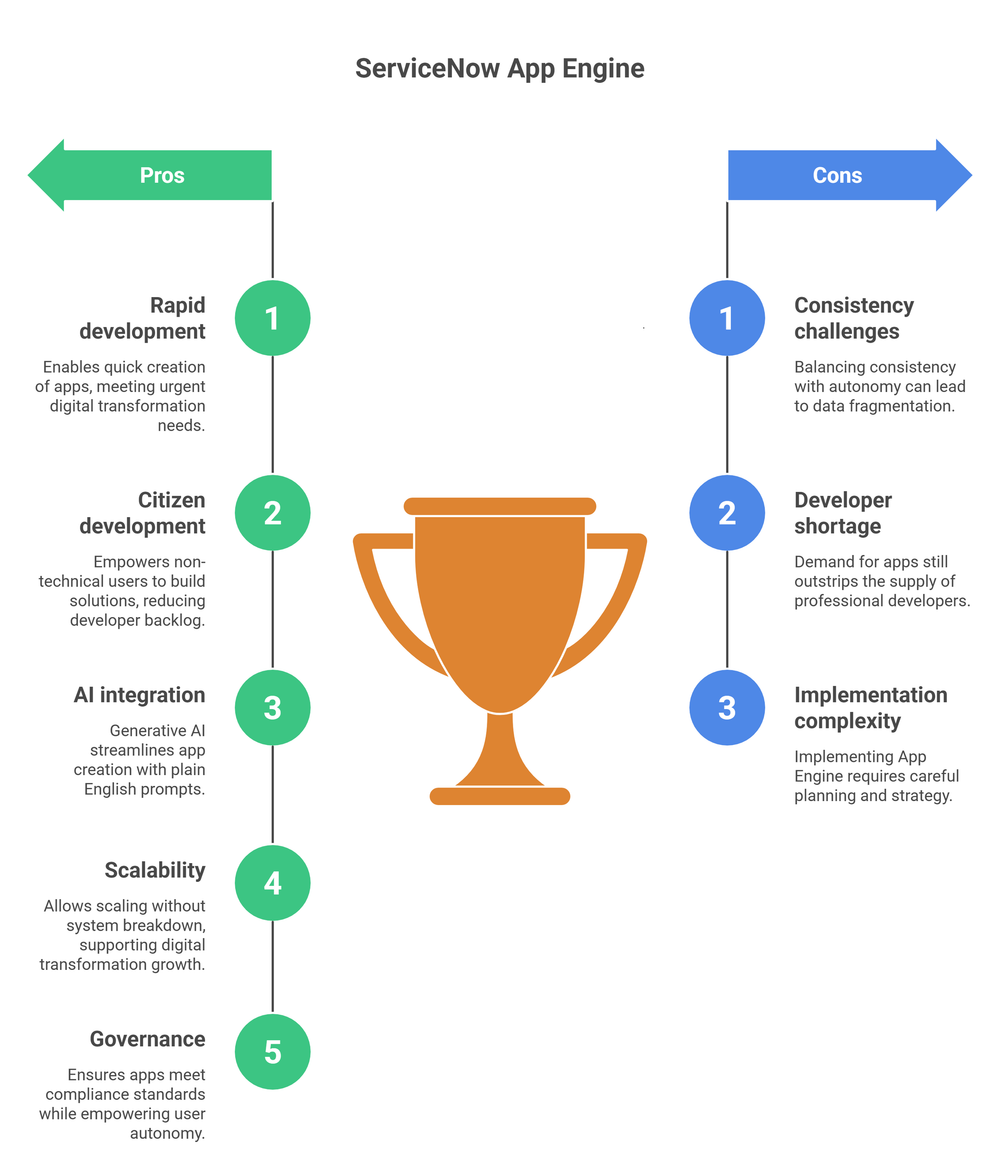
ServiceNow has always been in the business of enabling innovation, but the landscape has shifted significantly since the early days of low-code. While the journey began with the Creator Workflow and App Engine Studio (AES), the current Australia release has supercharged these tools with Generative AI (Now Assist). Today, Tinyloop helps customers combine lightning-fast app development with sophisticated workflow capabilities. This solves the perennial problem of needing time-sensitive solutions yesterday through "citizen development," all while maintaining the strict governance and management control required in a modern enterprise. As companies seek drastic measures to accelerate their digital transformation, ServiceNow’s App Engine fills the critical gap that most strategies miss: the ability to scale without breaking the system.
The Birth of Digital Urgency
CIOs today face a familiar but intensifying dilemma. Everyone in the organisation, from the C-suite to the newest hire, expects them to lead digital transformation efforts that feel modern and seamless. While management demands advanced solutions for data transparency and efficiency, employees expect an "Amazon-like experience" for every internal request. This creates digital urgency. If digital transformation is the jet plane meant to take your business to the next level, digital urgency is the frustration of being stuck in a horse-drawn carriage on the way to the airport. Everyone knows the jet is better, but the manual processes required to get there are sluggish, expensive, and often unreliable.
Why Digital Transformations Fail
Even in 2026, the statistics remain sobering: nearly 70% of digital transformation initiatives fall short. The culprit is usually the struggle to balance consistency (unified processes under a single source of truth) with autonomy (empowering people to create their own solutions). When you let employees build their own tools without oversight, data becomes fractured. But if you lock everything down with rigid controls, the solutions become too slow to meet specific needs. Furthermore, the demand for apps is still outstripping the supply of professional developers. With the integration of AI, the gap isn't just about the number of developers anymore; it’s about the speed of delivery in a hyper-competitive market.
Finding the Perfect Balance
Finding a solution to these problems is no longer optional; it’s a matter of survival. Low-code development now accounts for the vast majority of application activity, but a low-code tool on its own won't guarantee success. You need a strategy that blends autonomy with rigorous governance. At Tinyloop, we view low-code development as a “team sport.” ServiceNow’s App Engine Studio enables a united effort where citizen developers and technical experts build side-by-side. These apps meet end-user requirements while satisfying the compliance standards set by your IT oversight team. This ensures that every new app is safe, efficient, and fits perfectly within your established governance model.
Join the Digital Revolution
ServiceNow’s App Engine solves digital urgency by providing non-technical users with a vast toolkit of templates, AI-driven prompts, and reusable building blocks. With Now Assist integrated into the latest version, users can now describe the app they need in plain English and let the platform handle the heavy lifting. This creates a rapid turnaround for product creation and ensures a first-class user experience. The Creator Workflow allows your organisation to scale without "sprawl," deploying applications that are adaptable and effective. This undeniably saves time and money for ServiceNow customers and promotes a significantly higher success rate for your digital transformation goals.
Schedule a Tinyloop Strategy Session
If you want to see how the latest version of ServiceNow’s App Engine can transform your operations, we invite you to connect with the boutique experts at Tinyloop. We offer tailored strategy sessions to help you plan your app development, from the initial spark of an idea through to a governed, enterprise-wide rollout.