On December 15, 2025, ServiceNow completed its acquisition of Moveworks, a move that signalled a fundamental shift in enterprise AI. Just two months later, on February 26, 2026, ServiceNow delivered on that promise by launching two integrated solutions: Autonomous Workforce and ServiceNow EmployeeWorks. For the first time, conversational AI and deep enterprise search are natively fused with ServiceNow’s industry-leading workflow automation. As a Business Development Manager at TinyLoop, I see this as a turning point: enterprises no longer need to patch together fragmented AI tools. Instead, they can deploy AI specialists that execute end-to-end work with governance, security, and scale – directly where employees already collaborate, from Teams and Slack to any browser.
Two Competing AI Paradigms: Feature Function vs. Unified Platform
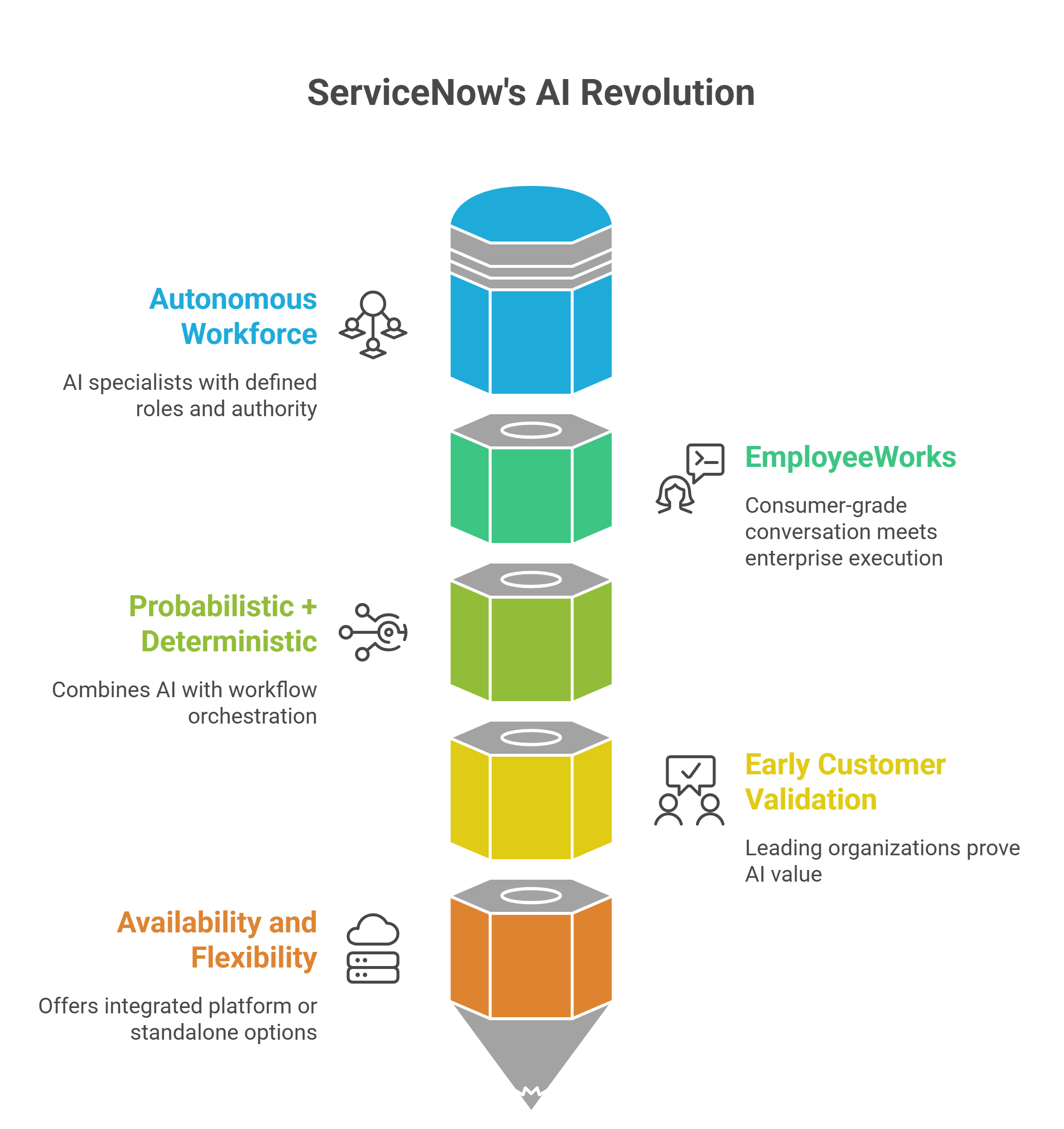
The market today faces a clear choice. On one side are feature-function AI solutions bolted onto disconnected SaaS applications, forcing enterprises to manage integration, maintenance, and complexity themselves. On the other side stands ServiceNow’s unified AI platform, which combines conversational AI, deterministic workflows, enterprise data, security, and governance into a single system. ServiceNow eliminates the fragmentation by wrapping probabilistic intelligence (EmployeeWorks’ strength) around deterministic orchestration (ServiceNow’s core). For C-suite leaders, this means no more pilots without production value – only AI that gets real work done, safely and at scale.
Autonomous Workforce: AI Specialists, Not Just Agents
ServiceNow’s Autonomous Workforce introduces a new category of enterprise AI: AI specialists with defined roles, scope, authority, and governance. Unlike basic AI agents that handle single tasks, these specialists – such as the Level 1 Service Desk AI Specialist – autonomously diagnose and resolve end-to-end IT requests, including password resets, software provisioning, and network troubleshooting. According to ServiceNow, their internal deployment already handles over 90% of employee IT requests, and the L1 AI Specialist resolves cases 99% faster than human agents. This is not incremental efficiency; it is a fundamental reallocation of human talent toward strategic problem-solving.
EmployeeWorks: Consumer-Grade Conversation Meets Enterprise Execution
ServiceNow EmployeeWorks represents the first major integrated output of the EmployeeWorks acquisition. It provides a conversational front door across Teams, Slack, and any browser, combining Employeeworks’ intuitive chat and enterprise search with ServiceNow’s unified portal and autonomous workflows. As Bhavin Shah, SVP and GM of Employeeworks and AI at ServiceNow, noted, “EmployeeWorks is one of the first AI front doors that doesn't just summarise, it completes the work.” For employees, this means natural language requests translate directly into governed, multi-system execution. For IT and business leaders, it delivers audit trails, policy enforcement, and operational reliability, something standalone LLMs cannot guarantee.
Probabilistic + Deterministic: The Governance Advantage
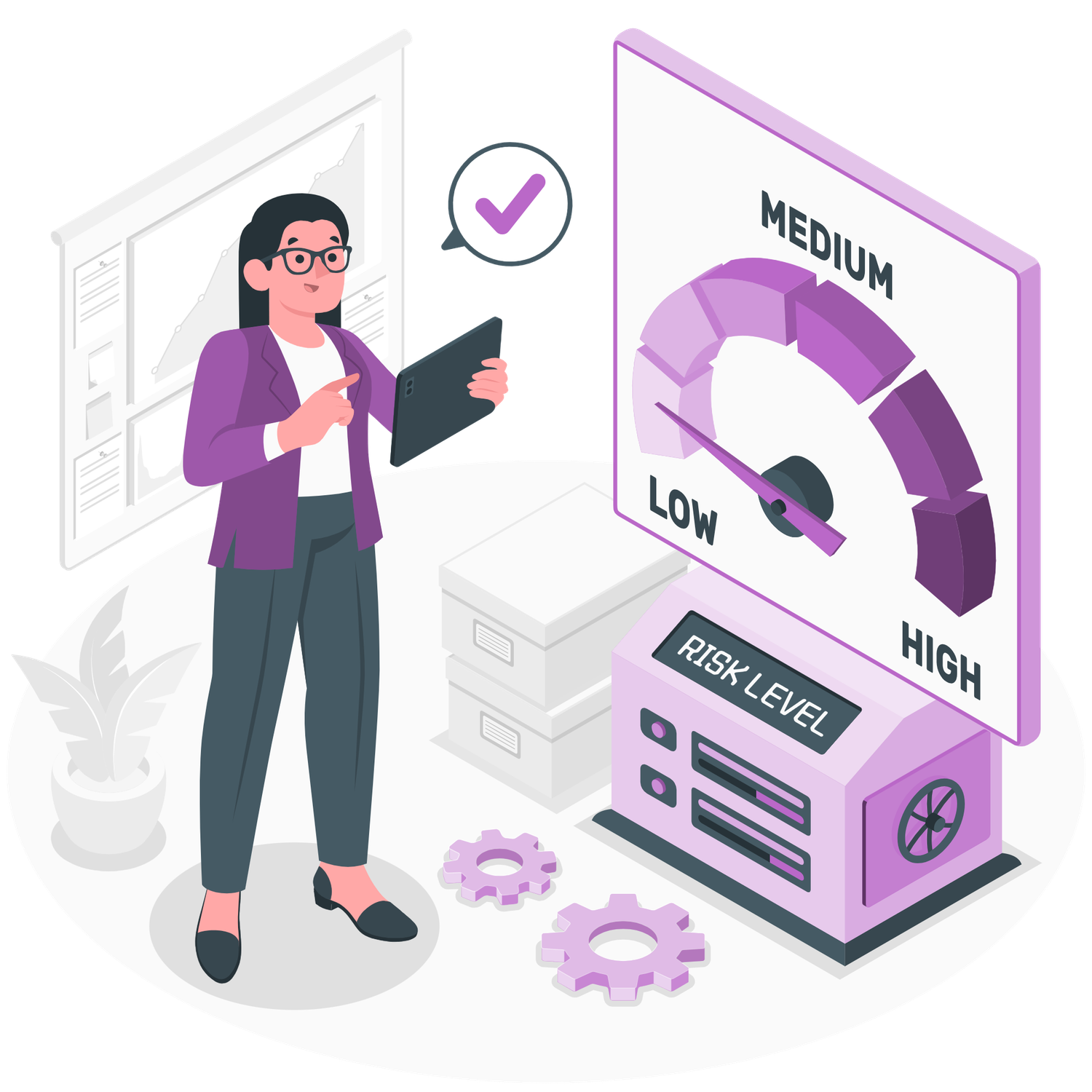
The core technical advantage of the integrated platform lies in combining probabilistic AI (which can hallucinate or give inconsistent answers) with deterministic workflow orchestration (which ensures predictable, auditable outcomes). ServiceNow achieves this through its AI Control Tower, where every action taken by an AI specialist is traceable and governed by policies embedded directly into the workflow layer. For regulated industries like healthcare and finance – as highlighted by CVS Health’s CISO Alan Rosa – this is non-negotiable. AI must maintain compliance and security while automating repetitive tasks, freeing teams to focus on mission-critical outcomes. ServiceNow’s platform is purpose-built for exactly this balance.
Early Customer Validation and What It Means for Enterprises
Leading organisations are already proving the value. CVS Health supports 300,000 colleagues across IT, HR, and procurement. The City of Raleigh reports that Now Assist resolves 98% of initial touchpoints. Siemens Healthineers’ AI assistant “Ada,” built on EmployeeWorks, saves 5,000 hours monthly with 91% satisfaction. UKG has moved from patchwork data to a proactive, predictive model with dozens of agentic use cases live. These are not theoretical benefits. For enterprises considering their next move, TinyLoop recommends assessing existing knowledge bases, identifying high-volume IT requests, and planning pilots around the L1 Service Desk AI Specialist, which remains in controlled availability now and is scheduled for general availability in Q2 2026.
Availability, Flexibility, and the TinyLoop Perspective
As of February 26, 2026, ServiceNow EmployeeWorks is generally available to customers. The L1 Service Desk AI Specialist is in controlled availability, with GA expected in Q2 2026. Importantly, EmployeeWorks continues to be offered as a standalone product, giving organisations flexibility to adopt the integrated platform incrementally. At TinyLoop, we help enterprises navigate exactly this transition – mapping conversational AI to existing workflows, governing AI specialists, and accelerating time-to-value without disrupting operations. The era of fragmented AI experiments is over. The autonomous workforce is here, and it works. The question is no longer if your organisation will adopt it, but how quickly you can responsibly deploy it.
Analogy: “EmployeeWorks: The ‘Magic Moving Truck’ for Your ServiceNow Tasks”
In ServiceNow, EmployeeWorks is like a magic moving truck for your digital chores; it lets you automatically relocate files or tasks from one place to another without anyone having to lift them manually. When it comes to licensing, think of it like a driver’s license for that truck: only the person who starts the automation (the admin) needs to own a special EmployeeWorks license, much like buying a single ticket for the driver. The rest of the team can watch the work move or receive it on the other end without paying anything extra. Once you buy that one license for the driver, they can use the magic truck as many times as needed all year long, making your workflows faster and smoother without hidden costs per move.
Here are the three key takeaways:
- ServiceNow has moved from AI experimentation to production reality, launching Autonomous Workforce and EmployeeWorks just two months after acquiring EmployeeWorks.
- The platform’s competitive edge lies in combining probabilistic conversational AI with deterministic, governable workflows to eliminate hallucinations and ensure auditability.
- Early customer results show 90%+ autonomous resolution of IT requests, 99% faster handling times, and thousands of employee hours saved each month, proving the autonomous workforce works today.