The Rise of the AI Specialist
The modern enterprise is currently navigating a pivotal transition in the evolution of digital labor. For nearly two decades, the focus of enterprise software was on the "System of Record"—the digitization of data and the creation of centralized repositories for IT, HR, and finance. This was followed by the "System of Action," where ServiceNow pioneered the orchestration of cross-departmental workflows. However, as the complexity of the enterprise tech stack increased, so did the friction for the end-user. Employees were forced to navigate a fragmented landscape of portals, forms, and ticketing systems, a phenomenon often referred to as "portal sprawl". The introduction of ServiceNow EmployeeWorks, catalyzed by the landmark acquisition of Moveworks in late 2025, represents the definitive shift into the era of the "System of Intelligence". This paradigm shift moves away from requiring employees to understand the underlying structure of the business and toward an interface where natural language intent is the primary driver of end-to-end execution.
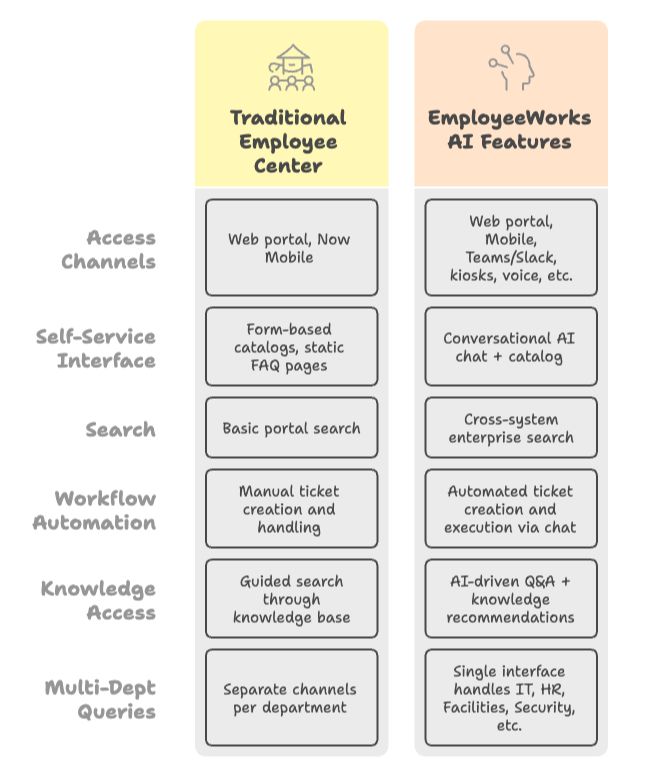
This integration addresses a fundamental limitation in traditional AI assistants. Most current market offerings act as assistive copilots, providing summaries or suggesting next steps, but ultimately leaving the final action to a human agent. EmployeeWorks is designed to be a "conversational front door" that interprets employee intent in natural language and executes work through governed ServiceNow workflows. Whether an employee needs to troubleshoot a VPN issue, order a laptop for a new hire, or update benefits, the system identifies the intent, navigates the relevant backend systems—such as Workday, SAP, or Coupa—and completes the task without the employee ever interacting with a form.
ServiceNow EmployeeWorks is positioned as the evolution of the Employee Center, incorporating Moveworks’ chat interface and search to provide an effortless experience for the workforce. It meets employees where they already work—whether that is in Microsoft Teams, Slack, a web browser, or via mobile devices and kiosks.
Key Features and Functional Use Cases
EmployeeWorks focuses on three primary pillars of employee interaction: Conversation-first execution, Actionable AI Search, and the Unified Priority View.
1. Conversation-First for Every Ask The platform moves business transactions into the chat interface. Instead of searching for the "Workday portal" or the "IT service desk form," an employee simply describes their need. The AI interprets the request, coordinates approvals across departments, and executes the action.
HR Context: An employee asks to book PTO and manage their schedule. The AI updates the ERP and handles the scheduling directly from chat.
IT Context: An employee requests access to a specific software package. The AI verifies eligibility, triggers the approval, and provisions the access automatically.
2. Search and Action in One EmployeeWorks transforms traditional enterprise search into "completed work." Rather than just providing links to documents, the search interface allows employees to take action directly from the search results. This is powered by Moveworks’ ability to index not just knowledge articles but also catalog items and deep enterprise data, respecting all user permissions.
3. The Unified Priority View (MyNow) The AI gathers priorities from across the business—IT alerts, HR approvals, procurement requests—and presents them in a single, clear view. This shifts the employee's role from "managing tasks" to "driving outcomes," as the system surfaces exactly what needs attention at any given moment
Integration with Third-Party Ecosystems - A critical differentiator for EmployeeWorks is its ability to operate across a heterogeneous tech stack. Through the Moveworks AI Agent Marketplace, organisations can deploy over 250 enterprise-ready templates that plug into systems like Workday, SAP, Coupa, and Salesforce.
This cross-system capability ensures that EmployeeWorks acts as the "system of engagement" for the entire enterprise, regardless of where the system of record resides.