Evolving from IT Implementation to Enterprise Platform Strategy
A CFO recently summed up a challenge many growing organisations face. “Over the past five years, we’ve invested in the best tools for every team. But somehow, it’s become harder, not easier, to see how the business is actually performing.”
It’s a familiar situation.
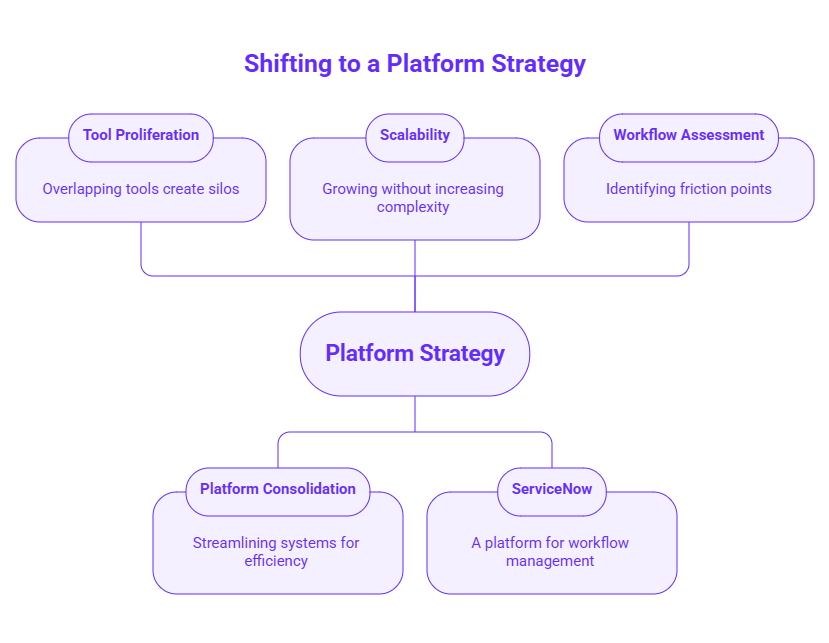
IT has its platform. HR has another. Customer operations rely on something else. Finance still pulls data together manually. Individually, the systems work; collectively, they create complexity. This is where many organisations reach a turning point. Technology is no longer the problem. How those technologies connect and how work flows between them is.
Why Technology Alone Doesn’t Scale
Most organisations didn’t plan to end up with fragmented systems. They made sensible decisions at the time, choosing tools to solve specific problems. But as the business grows, those decisions start to collide.
As organisations grow, they often add more tools to support different teams and functions. At first, this feels like progress. Each new system solves a specific problem.
But over time, every additional tool introduces another layer of processes, data, and integrations. Teams begin to optimise for their own needs, working efficiently within their own systems. However, across the organisation, something important is lost: visibility.
The business no longer operates as one connected flow. Instead, it becomes a collection of separate systems. This leads to familiar challenges. Data gets duplicated across platforms. Teams spend time manually reconciling information. Reports don’t always match, creating confusion. And decision-making slows down because no one has a clear, real-time view of what’s happening.
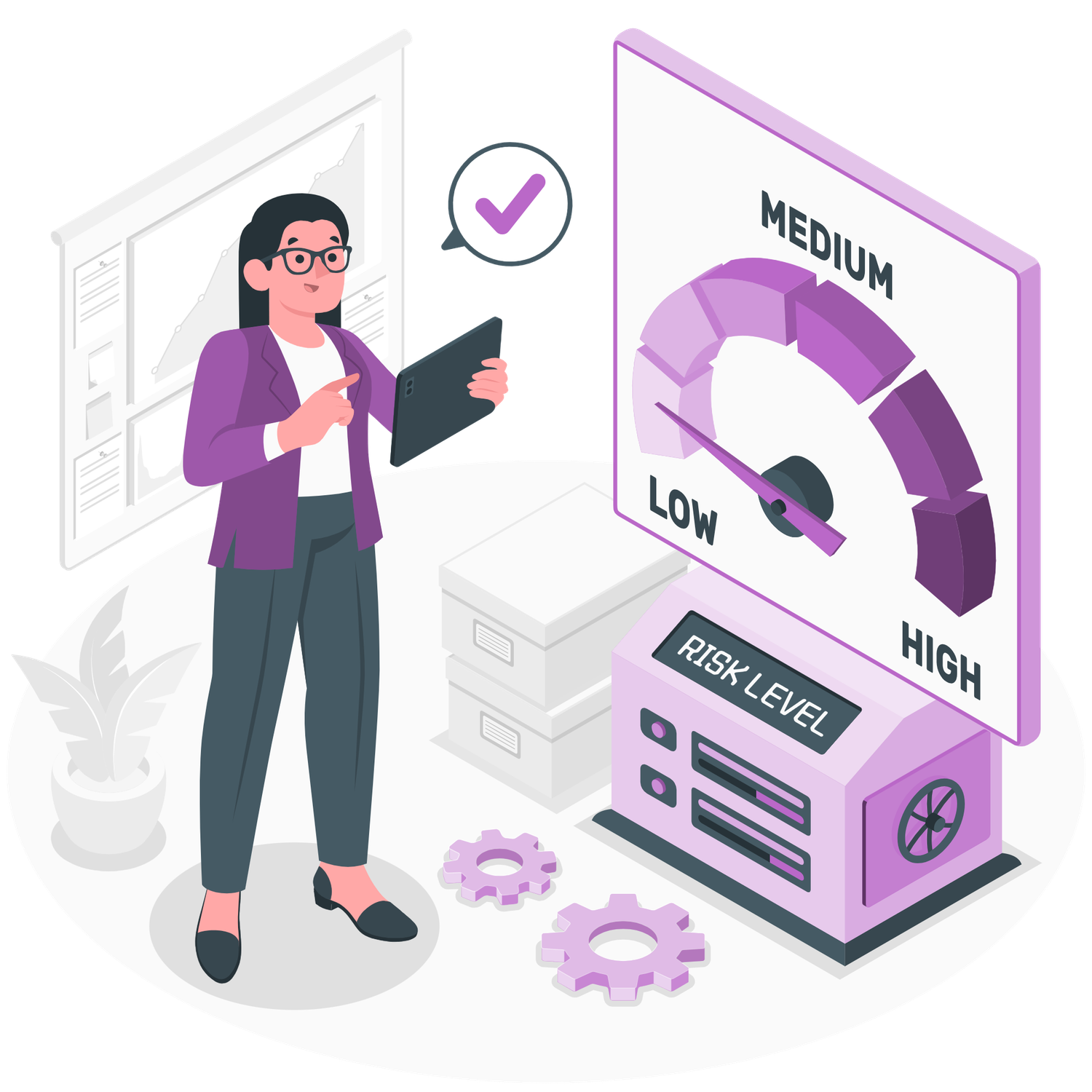
For CFOs, this issue often shows up in a different way—through rising costs and inefficiencies. There are more software licenses to manage, more integrations to maintain, and more complexity in supporting multiple systems. But beyond the financial impact, the bigger problem is operational fragmentation.
When systems aren’t connected, even simple questions become difficult to answer. It’s hard to see where delays are happening, which teams are overloaded, or how long it actually takes to deliver value after a sale is closed.
At this point, many organisations consider adding even more tools to fix the gaps. But this rarely solves the problem. In most cases, it only adds another layer of complexity.
What growing organisations really need is a different approach—a platform mindset.
Instead of stacking tools on top of each other, the focus shifts to connecting workflows across the business. With a unified platform, processes, data, and teams are aligned. The organisation can operate as a single, coordinated system rather than a set of disconnected parts. And that’s what ultimately makes scalability possible.
Why CEOs and CFOs Are Shifting to Platform Strategy
A platform strategy isn’t just about IT simplification. It’s about improving how the business operates.
For leadership teams, the benefits are clear:
- Better cost control
Fewer systems to manage and integrate.
- Clear operational visibility
A more accurate view of how work moves across the organisation.
- Faster execution
Reduced friction between teams and processes.
- Scalable growth
The ability to expand without adding operational complexity.
What Is a Platform Ecosystem (and Why It Matters)?
A business platform strategy connects systems, people, and processes into a single operational model. Instead of isolated tools, organisations operate through shared workflows.
Why Platform Ecosystems Outperform Standalone Tools?
When workflows are connected:
- Data flows automatically between teams
- Processes follow a consistent structure
- Leadership gains a single view of operations
This is what allows organisations to scale without losing control.
How ServiceNow Enables Platform Strategy
Platforms like ServiceNow are increasingly used as the foundation for this shift.
Rather than serving as a single-purpose system, ServiceNow can serve as the enterprise's workflow backbone.
.
A Single Workflow Layer Across the Organisation
ServiceNow connects processes across departments such as:
- IT
- HR
- customer service
- operations
This allows work to move through the organisation in a structured and visible way.
Reducing System Complexity
By consolidating workflows into a single platform, organisations can reduce:
- tool duplication
- integration effort
- operational overhead
This has a direct impact on both cost and efficiency.
Enabling Long-Term Scalability
One of the advantages of a platform approach is that it grows with the business.
Many organisations start with IT workflows and expand into:
- employee experience
- customer workflows
- enterprise service management
This creates a foundation for long-term transformation rather than short-term fixes.
Pro Tip from Real Implementations
One approach that consistently delivers results is to start with cross-functional processes that create the most friction.
For example:
- customer onboarding
- service request management
- approval workflows
Improving these areas first often delivers immediate value and builds momentum for broader platform adoption.
A Common Pitfall to Avoid
A common mistake is focusing on replacing tools without addressing how work actually happens.
This leads to:
- similar inefficiencies on a new platform
- low adoption
- limited return on investment
The better approach is to first understand and redesign workflows, then align the platform to support them.
Final Thought
At some point, every growing organisation faces the same question:
Are we managing systems, or are we managing how work flows across the business?
The answer often determines how well the organisation can scale.
Next Step
At TinyLoop, we help organisations move beyond fragmented systems by designing workflow-driven platform strategies using ServiceNow. If you're evaluating how to simplify your technology landscape while improving operational performance, the first step is understanding where your current workflows create friction. That conversation usually starts with a focused platform and workflow assessment.