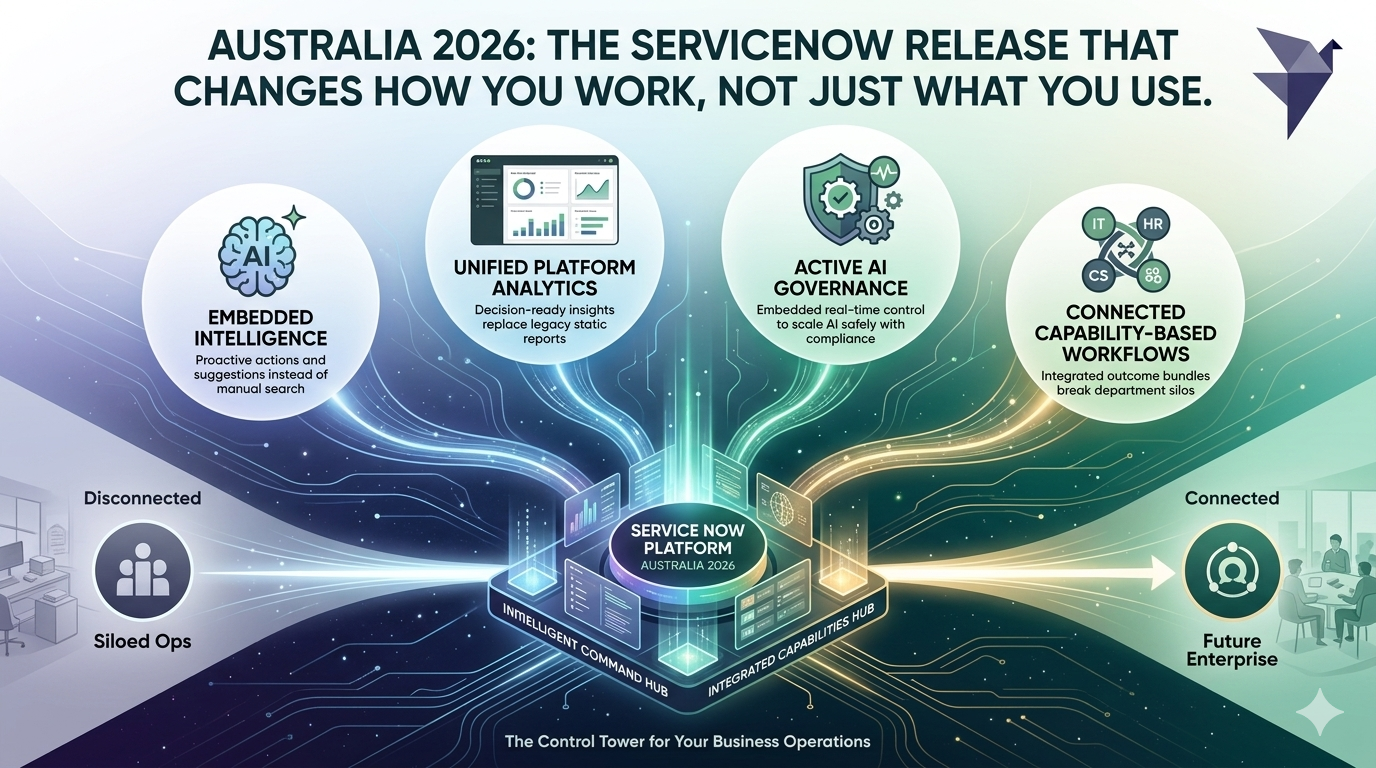
If you’ve been treating ServiceNow upgrades as routine maintenance, the Australia 2026 release is the time to change that mindset. This isn’t just another version; it’s a shift toward an AI-first, insight-driven platform that fundamentally changes how teams operate, make decisions, and deliver services. ServiceNow is clearly moving beyond traditional ITSM into a fully connected enterprise workflow ecosystem.
From Workflows to Intelligence: The Big Shift
The biggest difference in the Australia release is its move toward intelligent workflows. AI is now deeply embedded across modules like IT, HR, and customer service, turning manual, reactive processes into proactive systems that suggest actions, automate decisions, and reduce repetitive work. Instead of users searching for answers, the platform increasingly delivers them automatically.
What makes this unique is not just “more AI,” but how seamlessly it’s integrated into everyday workflows. This signals a move toward an “autonomous enterprise” where AI doesn’t just assist, it actively drives outcomes.
A New Era of Reporting: Platform Analytics Transformation
One of the most noticeable upgrades is the overhaul of reporting through Platform Analytics. Legacy dashboards are being replaced with a unified, interactive analytics experience that delivers real-time, decision-ready insights. For business leaders, this is a game-changer. Instead of static reports, teams get dynamic dashboards with better visualisation and predictive insights, making it easier to act quickly and confidently. This is where ServiceNow starts to feel less like a ticketing tool and more like a decision engine.
AI Governance Becomes Real (Not Just a Policy)
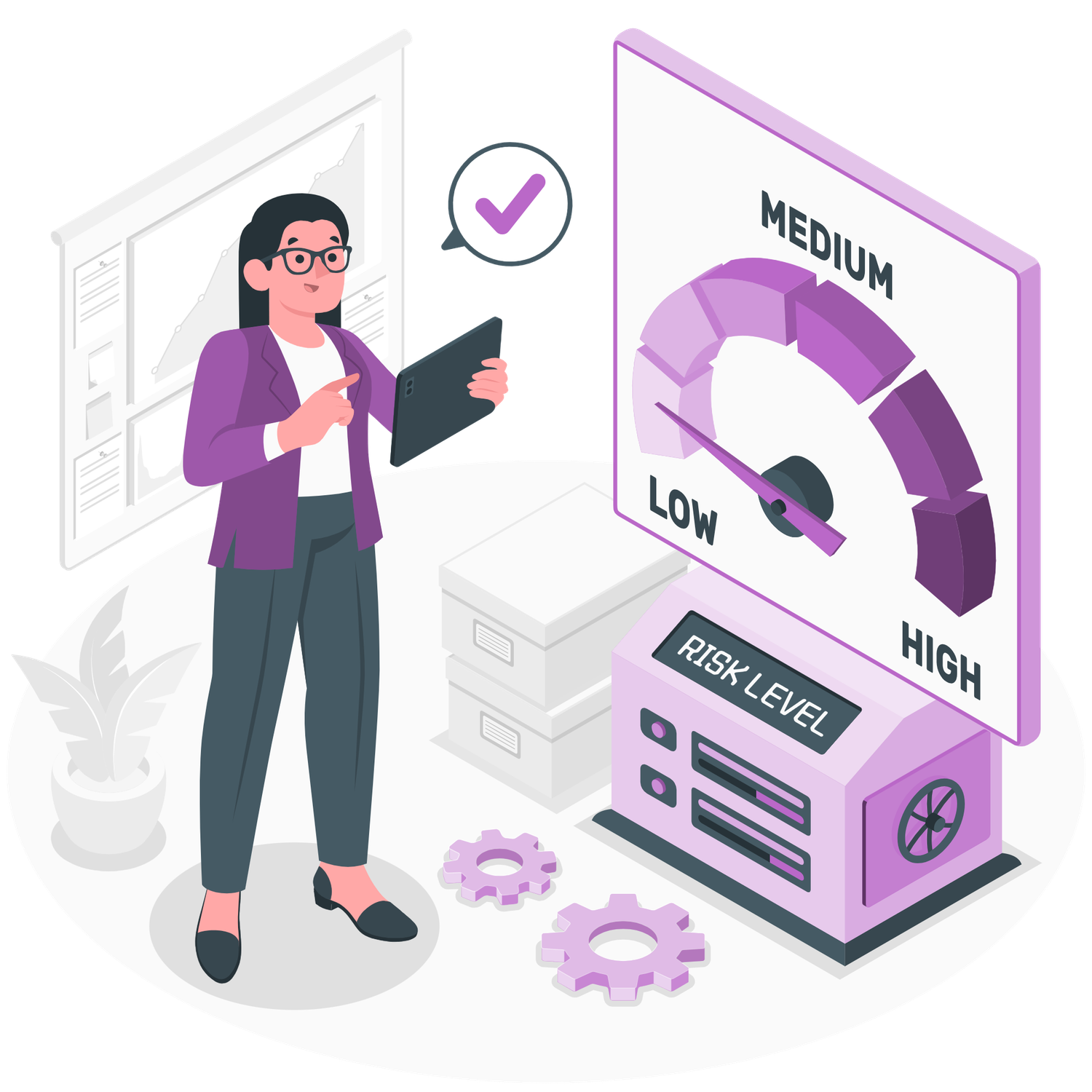
A standout feature and a major reason to upgrade is how the Australia release handles AI governance. Unlike earlier versions, where governance was more conceptual, this release embeds it directly into the platform’s architecture. This means organisations can safely scale AI without losing control. With built-in monitoring, lifecycle management, and compliance-ready frameworks, enterprises can trust AI-driven automation at scale—something that was previously a major barrier to adoption.
Smarter Enterprise Architecture and Automation
The release also introduces smarter tools for enterprise architecture, including AI-powered data exploration, automated documentation, and architecture analysis.
These features help teams understand complex systems faster, identify inefficiencies, and align IT with business strategy. In simple terms: less time documenting, more time improving.
Connected Workflows Across the Business
Another key improvement is how seamlessly different departments now work together. HR, IT, customer service, and security workflows are more integrated than ever, breaking down silos and improving collaboration across the organisation. This unified approach means faster onboarding, quicker incident resolution, and better customer experiences, all from a single platform.
Licensing in the Australia Release: Buying Outcomes, Not Just Tools
If the Zurich release was about "what tools do you need?", the Australia release is about "what do you want to achieve?" ServiceNow has overhauled its commercial model to be simpler, but it requires a different way of thinking about your spend.
Here is what TINYLOOP customers need to know about the shift
- Simplified Packages, Not Messy Lists: ServiceNow has cleaned up its "SKU" (product) list. Instead of buying dozens of tiny, overlapping components, capabilities are now bundled into cohesive packages. It’s a move from a fragmented "a la carte" menu to a streamlined, platform-based approach.
- AI is No Longer an "Add-on": In Zurich, AI was an experimental extra. In Australia, AI licensing is formalised and built into the core. You aren't just paying for a feature; you’re paying for the value and time the AI saves your team.
- Focus on Outcomes: The model is moving away from just counting "seats" or "users." Now, the focus is on capabilities. You’re investing in outcomes—like end-to-end workflow automation and predictive insights—rather than just buying a login for ITSM or HR.
- The "Stay Current" Requirement: Licensing is now more tightly linked to your version. To stay compliant and cost-efficient, there is a much stronger expectation to stay on the latest release. Delaying your upgrade could now impact your contract and support costs.
- Analytics Evolution: Legacy "Performance Analytics" is being phased out in favour of the new Unified Platform Analytics. This means some of your old licenses may need to be "remapped" to the new structure. It’s a great time to audit what you’re actually using.
The Bottom Line for Your Budget
This isn't necessarily about paying more; it’s about paying smarter. The Australia release encourages "licence optimisation." It’s the perfect moment to eliminate unused seats, ditch redundant legacy tools, and align your spend with the workflows that are actually driving your business forward.
Why You Should Upgrade to Australia 2026
Upgrading to the Australia release is less about keeping up and more about staying competitive. Organisations that adopt it early gain access to:
- AI-driven automation that reduces manual effort
- Real-time analytics for faster decision making
- Built-in governance for safe AI adoption
- A more connected, enterprise-wide workflow system powered by capabilities like ServiceNow’s AI Control Tower for visibility, compliance, and oversight.
Ultimately, this release positions ServiceNow as a central “control tower” for business operations, not just a support tool.
Final Thoughts
The Australia 2026 release marks a clear turning point in how ServiceNow should be viewed and used. It is no longer just an upgrade cycle or a technical refresh, but a strategic shift toward an AI-first enterprise platform. Organisations that continue to treat upgrades as routine maintenance risk missing the bigger opportunity moving from process automation to intelligent, outcome driven operations. This release pushes enterprises to rethink how work is delivered, how decisions are made, and how value is created across the organisation.
What stands out most is the convergence of AI, analytics, governance, and workflow integration into a single, unified operating model. ServiceNow is positioning itself less as a system of record and more as a system of intelligence and action. For organisations, the real value will come not just from adopting new features, but from re-aligning operating models and licensing strategies to fully leverage what the platform is becoming.
Three Key Takeaways
First, ServiceNow is shifting from automation to intelligence, where AI is embedded directly into workflows to proactively drive decisions and outcomes rather than simply supporting tasks.
Second, analytics and reporting are being transformed into real-time, unified Platform Analytics, making ServiceNow a true decision engine rather than just a reporting tool.
Third, licensing and commercial models are evolving toward bundled, outcome-based structures, meaning organisations must rethink how they measure value, optimise spend, and align usage with business results.